
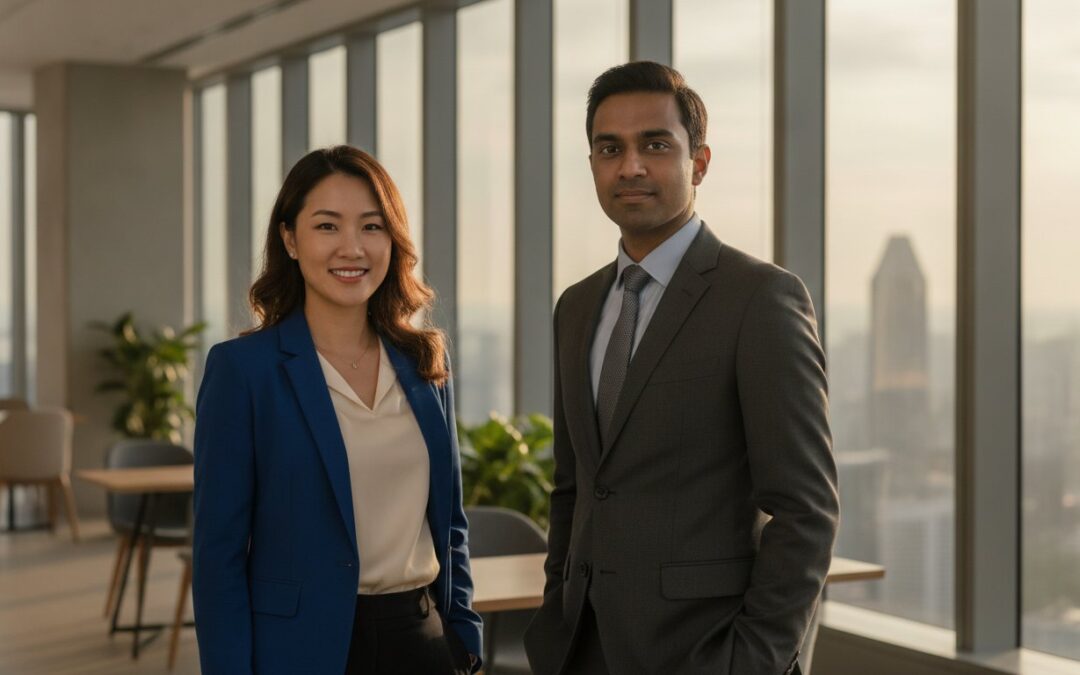
Did you know that a professional LinkedIn profile with a high quality photo receives 14 times more views than one without? Despite this clear advantage, many professionals still settle for photos that feel stiff, dated, or simply unlike their real selves. Understanding the common corporate headshot mistakes to avoid is the first step toward building a personal brand that creates trust. Whether you’re worried about looking too old or dealing with how Singapore’s humidity affects your hair, the secret to a great portrait often lies in what you choose to leave out of the frame.
It’s completely natural to feel a bit awkward when a camera is pointed at you. Most people worry they’ll look unprofessional or that they won’t recognize the person in the final edit. We believe that a great headshot should be a stress-free experience that captures your genuine personality. In this guide, we’ll walk you through 12 critical errors to sidestep, from wardrobe mishaps to posing blunders. You’ll discover exactly how to achieve a confident, approachable look that elevates your professional brand in 2026.
Key Takeaways
- Learn why small patterns and neon colors fail on digital screens and how to select wardrobe pieces that complement your skin tone under professional lighting.
- Master simple posing techniques like the ‘Squinch’ and jaw relaxation to replace a ‘deer in headlights’ expression with genuine confidence.
- Understand the risks of over-retouching and AI-generated portraits which can create an ‘uncanny valley’ effect that distances you from recruiters.
- Identify the most common corporate headshot mistakes to avoid to ensure your LinkedIn profile reflects a professional, approachable, and authentic version of yourself.
- Discover how a private, self-photo studio environment removes the social pressure of a live photographer, allowing for a more natural and stress-free experience.
Why Your Corporate Headshot Is More Than Just a Profile Picture
In the high speed business environment of Singapore, your digital presence often reaches a potential client or recruiter before you do. A first impression is formed in milliseconds, and it is usually based on the small circular image next to your name. One of the most common corporate headshot mistakes to avoid is treating this photo as a mere formality. It is actually a visual handshake that establishes your level of professionalism before a single word is exchanged.
A dated or poor quality photo does more than just look old; it signals a lack of attention to detail. If you haven’t updated your image in five years, it suggests you might be out of touch with current industry standards. Similarly, using a cropped photo from a social event or a blurry holiday snap tells the viewer that you don’t take your personal brand seriously. Trust is built on consistency, and a professional portrait shows that you are invested in every aspect of your career. While modern smartphones have impressive cameras, they often use lenses that distort facial features. This technical gap is why a “good selfie” rarely matches the fundamentals of portrait photography found in a controlled studio setting.
The ROI of a Professional Image in 2026
The data supporting professional imagery is hard to ignore. LinkedIn profiles with high quality headshots receive 14 times more views and up to 36 times more inbound messages than those without. This impact extends beyond social media platforms. Your photo appears on company websites, internal Slack channels, and email signatures daily. A professional headshot acts as a 24/7 digital ambassador for your career. When your image looks polished across all these touchpoints, it reinforces a sense of reliability and leadership that can lead to faster promotions and more successful networking.
Authenticity vs. The ‘Corporate Mask’
Modern professional branding has moved away from the stiff, unsmiling executive look of the past. Today, looking approachable and trustworthy is far more valuable than looking purely “serious.” There is a significant shift toward lifestyle corporate photography that highlights personality over a rigid corporate mask. This approachability helps humanize you to stakeholders and makes you seem like someone people actually want to work with. You can explore more about this transition in our guide on LinkedIn Profile Success: The Power of a Quality Headshot. By prioritizing a look that is both professional and authentically you, you bridge the gap between competence and connection.
Wardrobe and Grooming Pitfalls That Kill Professional Credibility
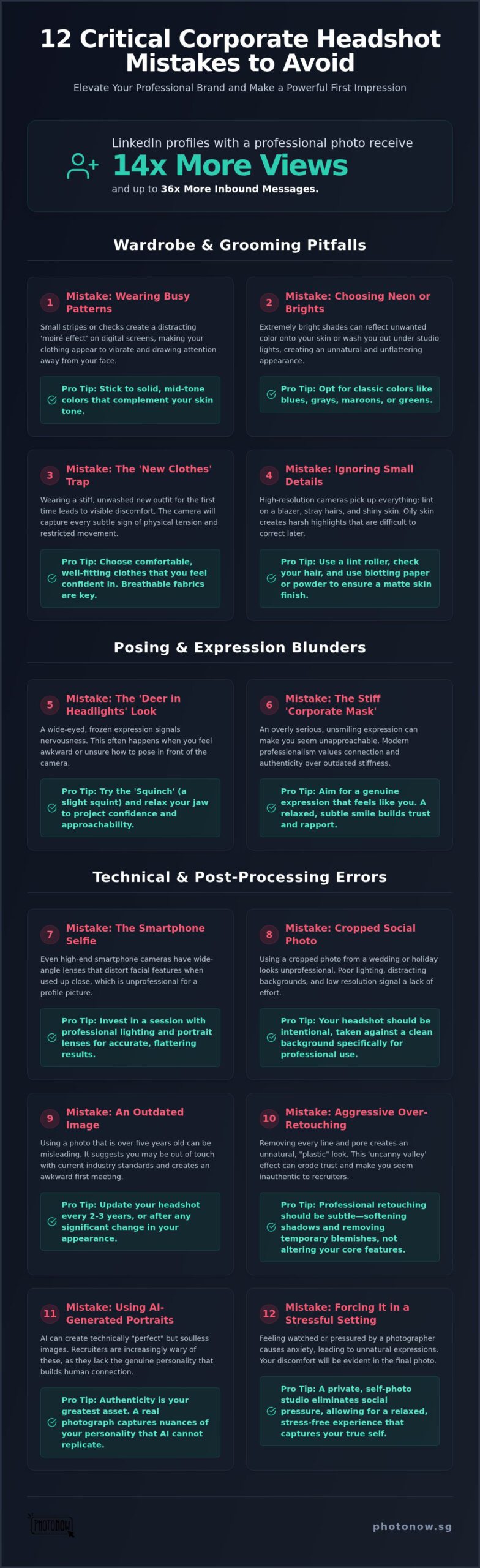
Your choice of attire is the foundation of a successful portrait. One of the most overlooked corporate headshot mistakes to avoid is wearing small, busy patterns like thin stripes or tiny checkers. On digital screens, these patterns often create a distracting visual distortion known as the moiré effect. This makes your shirt appear to vibrate or shimmer, which pulls attention away from your face. To ensure a clean and crisp image, it is best to stick with solid, mid-tone colors. Avoid neons or extremely bright shades that can reflect unwanted color onto your skin or wash you out under professional studio lighting.
Comfort is just as important as style. Many professionals fall into the ‘new clothes’ trap, wearing a stiff, unwashed suit for the first time during their shoot. This often leads to visible discomfort and restricted movement. The camera captures these subtle physical tensions with ease. Similarly, living in Singapore requires specific wardrobe strategies. Choose breathable fabrics like high quality wool blends or structured cottons that resist wilting in the humidity. Avoid light colored silks that may show sweat marks before you even step into the air conditioned studio. These small choices ensure you remain composed and relaxed throughout the experience.
Grooming details can make or break your credibility. A simple lint roller is your best friend. High resolution sensors will highlight every stray hair and speck of dust on a dark blazer. Additionally, aim for matte skin. Use blotting papers or a light dusting of translucent powder to manage shine. Oily skin can create harsh, distracting highlights that are difficult to correct in post-processing. Taking a moment to check these professional headshot do’s and don’ts ensures that no minor oversight distracts from your professional message.
Dressing for Your Industry Standard
Your outfit should reflect the expectations of your specific field. A tech founder might opt for a high quality knit sweater or a clean polo, while a legal professional typically requires the structure of a full suit. Regardless of the industry, consider the power of the ‘third piece.’ Adding a blazer or a tailored cardigan provides instant structure and a more finished appearance. For more detailed advice, you can read our guide on What to Wear for Your Next Corporate Headshot Session when preparing for your day.
Hair and Makeup: The ‘Less is More’ Rule
Modern HD cameras are incredibly sensitive, so a light touch is essential. Heavy foundation or aggressive contouring can look unnatural in person and even more so on screen. To manage ‘The Frizz’ common in our local climate, apply a smoothing serum just before your session begins. You should follow the ‘2-hour rule’ by completing your hair and makeup at least two hours before the shoot to let everything settle. If you are currently planning your session, these small adjustments will ensure you look like the best version of yourself without appearing overdone.
The Psychology of the Lens: Posing and Expression Blunders
The camera lens often acts as a mirror for our insecurities, causing us to freeze up in ways we don’t in daily life. One of the primary corporate headshot mistakes to avoid is over-performing for the lens. When you try too hard to look professional, you often end up looking guarded or unapproachable. Breaking this cycle requires a methodical approach to how you physically present yourself during the session.
First, focus on your jaw and shoulders. Tension typically settles here, creating a “deer in headlights” appearance. Drop your shoulders away from your ears and let your teeth part slightly to soften the lower half of your face. Second, master the “Squinch.” This technique involves slightly lifting and tightening the lower eyelids to convey confidence. Wide eyes often signal fear, while a subtle squinch suggests focus and self-assurance. Third, find your best angle. A flat, passport-style angle rarely flatters; instead, use slight head tilts and turns to create dimension and character. Fourth, try the “Fake Laugh” trick. A silent, forced chuckle often breaks the tension and triggers a genuine smile that reaches your eyes. Finally, consider your posture. While standing often projects more energy and authority, sitting can feel more grounded and approachable for leadership roles.
Avoiding the ‘Stiff’ Shoulder and Turtle Neck
Creating a sense of engagement starts with a slight “lean in” toward the camera. This movement eliminates the “turtle neck” effect where the chin pulls back into the neck, creating an unflattering silhouette. Even if your hands aren’t in the frame, rest them on your lap or in your pockets. This simple placement helps settle the shoulders and prevents them from hunching upward toward your ears. For a deeper dive into these physical cues, check out our guide on How to Look Confident in Your Business Portraits.
The ‘Dead Eyes’ Dilemma
Staring directly into the glass of the lens often results in a blank, “dead” expression. To avoid this, focus on a point just behind the camera lens to create a sense of depth in your gaze. This makes the viewer feel like you are looking at them, not just through them. This is where “Smizing” comes into play. Smizing is the act of smiling with your eyes by engaging the muscles around the socket; it is essential for building corporate trust because it signals warmth and authenticity without needing a full, toothy grin.
Technical and Post-Processing Mistakes That Look Unprofessional
The rise of digital tools has introduced a new set of corporate headshot mistakes to avoid, specifically regarding how we handle the final image. Many professionals are now turning to AI-generated portraits as a low-cost alternative. While these tools are fast, they often result in an “uncanny valley” effect where the face looks slightly unnatural or robotic. Recruiters and clients can usually spot these synthetic images. Because trust is a cornerstone of professional relationships, an obviously fake photo can undermine your credibility before you even speak. Authentic photography captures the subtle human warmth that AI simply cannot replicate.
Over-retouching is another common pitfall in modern portraits. The goal of post-processing should be to enhance, not to reinvent. When editors remove every “character line” or wrinkle, the subject often ends up looking like a plastic mannequin. This loses the 76% increase in perceived competence that a genuine, professional headshot provides. Similarly, using a photo that is more than three years old creates a trust gap. If you show up to an interview or a meeting looking significantly different than your profile picture, it creates a moment of confusion that can derail the initial rapport. Your background choice also matters. Avoid cluttered office spaces that distract from your face, but stay away from overly sterile, industrial grey backdrops that feel dated and cold.
Lighting Fails: From Flat to Harsh
Poor lighting can ruin even the best wardrobe and pose. While ring lights are popular for video calls, they often create distracting, circular reflections in eyeglasses that obscure the eyes. Professional studio lighting uses contrast to add dimension to your face, preventing you from looking flat or washed out. You can see examples of how balanced lighting works by viewing our standards for a Passport & Visa Photoshoot, where clarity and accuracy are the top priorities. Proper shadows are not the enemy; they define your features and create a more cinematic, high-end result.
The Selection Process Error
Choosing your own photos is surprisingly difficult because we are often our own harshest critics. We tend to focus on perceived flaws that others don’t even notice. It is always beneficial to have a second pair of eyes help you select the final images. Look for “micro-expressions” that signal both warmth and competence simultaneously. The danger lies in choosing a “perfect” photo that has been edited so heavily it no longer resembles you in a real-world setting. If you want to ensure your final selection is both professional and authentic, you can book a session that allows you to see and select your digital results instantly.
How a Private Studio Environment Eliminates Headshot Anxiety
Many people feel a natural sense of performance anxiety when a photographer is watching their every move. This is often called the ‘Photographer Effect,’ where the presence of a stranger triggers physical stiffness and forced expressions. By removing the observer, you eliminate one of the most common corporate headshot mistakes to avoid: looking uncomfortable or ‘plastic’ in your own skin. A private studio allows you to let your guard down. This ensures that the final image captures your genuine personality rather than a rigid, defensive mask.
PhotoNow provides a specialized environment at The Centrepoint, Orchard Road, designed for professionals who value both quality and privacy. You receive professional grade lighting and high end camera equipment without the intimidation of a live photographer. This ‘no-fuss’ approach prioritizes your peace of mind. It allows you to focus on your posture and expression in a completely relaxed setting. It is the perfect solution for those who find traditional studio sessions to be overly formal or stressful.
The Self-Photo Advantage for Professionals
The primary benefit of a self-photo setup is the total control it places in your hands. You use a remote shutter to decide the exact moment the camera captures your image. This removes the pressure of having to ‘be ready’ on someone else’s timeline. The instant feedback loop is equally vital. You can view your shots on a large screen immediately after taking them. This lets you adjust your hair, fix a stray collar, or refine your pose on the spot. This methodical process ensures that you leave with a Corporate Headshot Singapore at PhotoNow that reflects your real self.
Convenience at The Centrepoint
Our location in the heart of Orchard Road makes it easy to fit a session into a busy schedule. You don’t need to block out an entire afternoon for a professional refresh. The efficiency of our model means you can achieve premium results quickly. Many clients also find it convenient to combine their professional updates with other needs, such as a Graduation Photography session. Understanding the technical corporate headshot mistakes to avoid is only half the battle. The other half is finding an environment where you feel confident enough to shine. If you’re ready to upgrade your profile, you should Book Your Private Corporate Headshot Session at PhotoNow today.
Elevate Your Professional Brand with Confidence
Your professional image is a powerful asset that works for you even when you aren’t in the room. By mastering wardrobe choices and subtle posing techniques, you’ve already taken the biggest steps toward a successful portrait. Understanding the most common corporate headshot mistakes to avoid ensures that your first impression is built on authenticity and competence rather than stiff, over-processed imagery. Whether you are updating your LinkedIn profile or preparing for a leadership role, your photo should look exactly like the best version of your real self.
Achieving these results doesn’t have to be a stressful ordeal. At PhotoNow, we’ve designed a private studio experience at The Centrepoint that removes the social pressure of a traditional shoot. You’ll enjoy professional lighting and equipment with the total privacy of a self-photo environment. This means no-photographer anxiety and instant digital results for your immediate selection. If you’re ready to secure a portrait that truly represents your personal brand, you can book your private corporate headshot at our Orchard Road studio today. Your journey to a more confident and approachable professional profile starts here.
Frequently Asked Questions
What is the #1 mistake people make in corporate headshots?
The number one error is appearing unapproachable or rigid because of performance anxiety. This often happens when you feel pressured by a live photographer watching your every move. To fix this, focus on relaxing your jaw and finding a private environment where you feel comfortable being yourself. A genuine expression is always more valuable than a technically perfect but cold image.
Is it okay to wear glasses in a professional headshot?
You should definitely wear your glasses if they are a part of your daily professional look. The key is ensuring your lenses are clean and adjusted to prevent glare. Professional studio lighting is designed specifically to minimize reflections, so your eyes remain the clear focus of the portrait. If you have multiple pairs, bring them along to see which frame complements your face best under the lights.
How often should I update my LinkedIn profile picture?
It is recommended to update your professional photo every two to three years to ensure it accurately represents your current appearance. If you have a significant change in hairstyle, weight, or age, a refresh is essential. Keeping your image current prevents a trust gap when you meet clients or recruiters in person. A recent photo signals that you are active and attentive to your personal brand details.
Should I use an AI headshot generator for my business profile?
You should avoid synthetic AI images because they often fall into the uncanny valley and look unnatural to the human eye. While they are convenient, they can damage your personal brand by appearing fake to recruiters. Real photography captures the subtle micro-expressions that build trust and signal genuine competence. Authenticity is a premium trait in 2026, and a real photo proves you are a real person.
How do I avoid looking stiff or awkward in my photos?
Avoiding a rigid appearance requires a combination of physical posture and mental relaxation. One of the most common corporate headshot mistakes to avoid is standing perfectly flat toward the camera; instead, tilt your head slightly and lean toward the lens. This creates a sense of engagement and warmth. Practicing a soft smile that reaches your eyes will also help you look more approachable and less rehearsed.
What colors are best for a corporate headshot in Singapore?
Solid, mid-tone colors are the most effective choices for a professional portrait in Singapore’s business environment. Navy blue, charcoal grey, and deep jewel tones work well because they provide contrast without being as harsh as pure black or white. These shades are versatile and look polished across various digital platforms and company websites. Avoid neon colors or busy patterns that can distract the viewer from your facial expressions.
Can I do my own professional headshot at a self-photo studio?
You can absolutely achieve high-end results at a self-photo studio like PhotoNow. These spaces provide professional lighting and high-resolution cameras, but you control the shutter with a remote. This setup is one of the best ways to bypass traditional corporate headshot mistakes to avoid, such as the stiffness caused by a stranger’s presence. It allows you to take your time and select your best digital results instantly.
How do I manage frizzy hair for a shoot in Singapore’s humidity?
Managing hair in our humid climate requires a light application of anti-frizz serum or hairspray just before you enter the studio. It is helpful to arrive a few minutes early to let your hair settle in the air-conditioned environment. Using a private studio at a central location like Orchard Road allows you to touch up your look immediately before the session. This ensures your hair looks polished and professional throughout the entire shoot.
Recent Comments