
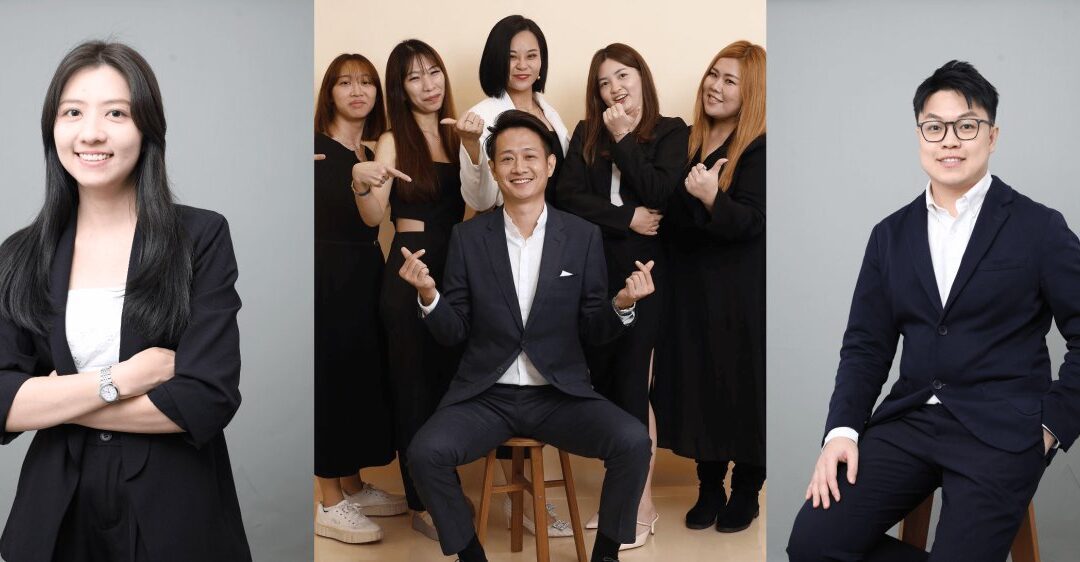
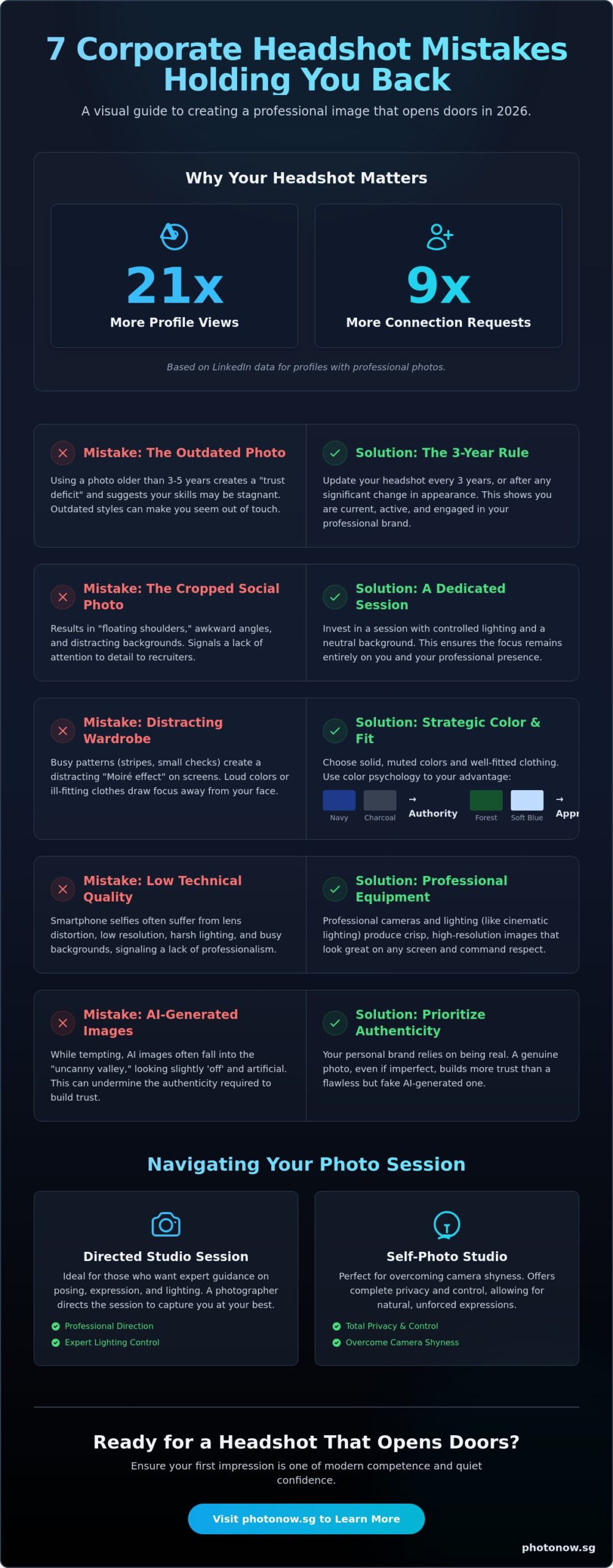
Did you know that LinkedIn profiles with a professional photo receive up to 21 times more views and nine times more connection requests? Even with 70% of professionals now opting for AI-generated images, your personal brand relies on a level of authenticity that an algorithm often misses. It’s completely natural to feel a bit awkward in front of a lens or worry that your outfit won’t translate well on screen. However, many professionals in Singapore unknowingly stall their careers by making common corporate headshot mistakes to avoid. You deserve an image that reflects your current competence, not a version of yourself from five years ago.
We’re here to help you project a polished, high-value professional image that opens doors. In this guide, you’ll discover how to sidestep visual pitfalls and build a headshot library that commands respect across every platform. We’ll walk through a clear preparation checklist to boost your confidence during the session; this ensures you look like the capable leader you are. From choosing the right cinematic lighting to mastering a natural expression, here is how to gain a professional edge in 2026.
Key Takeaways
- Learn how a current, high-quality image removes visual friction and builds immediate trust with your professional network.
- Master wardrobe and grooming choices that avoid digital distortion while using colour psychology to project authority.
- Identify technical corporate headshot mistakes to avoid, such as smartphone lens distortion or the “uncanny valley” effect of AI filters.
- Gain practical tips to overcome camera shyness and capture genuine micro-expressions that communicate approachability.
- Compare the benefits of a directed studio session against the privacy and control offered by a modern self-photo studio experience.
The “Good Enough” Fallacy: Why Your Current Photo Might Be Costing You Opportunities
Your professional image isn’t just a placeholder; it’s a silent negotiator that works even when you’re offline. Many professionals fall into the trap of the “good enough” fallacy, believing that any clear photo will suffice for their LinkedIn profile or company website. This mindset is one of the primary corporate headshot mistakes to avoid because it introduces “visual friction.” This concept refers to the subtle, distracting elements in a photo that force a viewer to question your competence rather than focus on your expertise. To understand the foundation of professional branding, it helps to define what is a headshot and how its purpose has shifted from simple identification to a strategic leadership asset.
When you use a photo that’s five years old, you’re unintentionally creating a trust deficit. Imagine walking into a boardroom for a high-stakes meeting only for your client to realize you look significantly different from your digital profile. That split second of confusion creates a micro-moment of distrust. It suggests that you’re either not attentive to your current brand or, worse, that you’re trying to hide your age or experience level. Reliability is built on consistency, and your physical appearance should always match your digital presence to ensure a seamless transition from online connection to in-person collaboration.
There’s also the issue of “social media spillover,” where casual, personal photos are repurposed for professional use. A photo that works for a weekend brunch rarely carries the same authority required for a corporate bio. Professional credibility is easily harmed when lighting is too harsh, backgrounds are cluttered, or the resolution is so low that the image appears pixelated on a large monitor. Amateur metadata, such as generic file names like “IMG_001.jpg” or small file sizes, also signals a lack of technical polish to recruiters and partners who value attention to detail. Staying ahead of these issues means keeping up with the latest professional profile picture Singapore trends to ensure your image meets the modern standard of polished authenticity.
The Danger of the Cropped Social Photo
We’ve all seen the “floating shoulders” look. This happens when a professional tries to crop themselves out of a group photo from a wedding or a social event. The result is often an awkward angle where someone else’s hand is visible on your shoulder or the lighting feels entirely out of sync with a business environment. These photos often feature heavy background blur that looks artificial or “busy” surroundings that pull focus away from your face. DIY cropping signals a lack of attention to detail that recruiters often interpret as a reflection of your professional work ethic.
When “Vintage” Becomes Outdated
A general rule for the fast-paced market is the “three-year rule.” If your headshot is older than three years, it’s time for an update. Outdated hairstyles, older eyewear trends, or even clothing styles from a previous era can subconsciously signal that your skills might also be stagnant. By maintaining a fresh image, you demonstrate that you’re active, engaged, and evolving within your industry. It’s about projecting a version of yourself that is both authentic and ready for the challenges of 2026. Avoiding these corporate headshot mistakes to avoid ensures that your first impression is one of modern, quiet competence.
Wardrobe and Grooming Blunders That Distract from Your Message
Your choice of attire acts as the frame for your professional story. While you might focus on the perfect smile, the fabric on your back often speaks louder than you think. Selecting the wrong textures or colours is high on the list of corporate headshot mistakes to avoid because these elements can create visual noise that distracts from your face. A well-fitted suit or a crisp blouse isn’t just about fashion; it’s about removing any barriers between you and your audience. When your wardrobe is seamless, your expertise takes centre stage.
The Pattern and Colour Trap
High-contrast stripes or tiny checkered patterns are a nightmare for digital screens. They often cause the “Moiré effect,” where patterns appear to vibrate or shimmer, making your photo uncomfortable to look at on a mobile device. Instead, lean into colour psychology to guide the viewer’s perception. Navy blue and charcoal grey project authority and reliability, while forest green or soft blues can make you appear more approachable. If you’re in a traditional industry like finance, stick to dark tones; if you’re in a creative field, you have more room for personality, but solid colours remain the safest bet for a timeless look. The “Safe Three” palette-Navy, Charcoal, and Forest Green-works universally across almost all skin tones and backgrounds.
Fit is equally critical to your final result. A loose collar or a wrinkled blazer suggests a lack of attention to detail that can undermine your perceived competence. Even the most expensive garment fails if it doesn’t sit right on your frame. This precision is vital because of the importance of an updated headshot in building a cohesive brand. If your clothes look like they belong to a different version of you, the message of your current success gets lost.
Grooming Gaps: Managing the Environment
Singapore’s humidity is the ultimate test for any professional photo session. Heat leads to skin shine and hair frizz, which can quickly result in a “wilted” appearance that looks messy on camera. To combat this, we recommend the “15-minute cool down” rule. Arrive at the studio early to let your body temperature regulate in the air conditioning before the lights go on. This simple step prevents the immediate onset of perspiration that high-definition cameras capture with unforgiving clarity.
For makeup, the goal is enhancement rather than transformation. High-definition photography picks up heavy foundations, so a light, matte finish is usually more effective at managing shine without looking “made up.” Blotting papers are your best friend in our local climate. If you’re feeling overwhelmed by these details, booking a dedicated Corporate Headshot Package can provide the controlled environment needed to keep you looking sharp and composed from start to finish. Focus on natural textures; keeping it simple ensures your competence remains the focal point.
Technical Pitfalls: Why Smartphone Selfies Fail the Professional Test
Modern smartphones are marvels of engineering, yet they’re designed for convenience rather than professional-grade optics. Relying on a quick selfie is one of the most common corporate headshot mistakes to avoid because of inherent hardware limitations. Most mobile devices utilize wide-angle lenses that, when held at arm’s length, subtly distort your facial features. This distortion often makes the nose appear larger or the face wider than it actually is. These minor optical inaccuracies prevent you from looking like your best, most authentic self in a high-stakes digital environment. Understanding the technical specs needed for high-resolution displays is essential, and our guide on 2026 trends in personal branding for a professional profile picture in Singapore covers exactly what modern platforms require.
Beyond the lens, the “Uncanny Valley” of over-retouching has become a significant hurdle in 2026. While AI filters promise perfection, they often strip away the natural skin textures that signal humanity and trust. When your skin looks like polished plastic, you lose the authentic connection that a professional portrait is supposed to build. It’s much better to have a few natural character lines than to appear as a synthetic avatar. True professionalism lies in high-quality lighting that minimizes flaws naturally rather than relying on heavy-handed digital edits.
Harsh Lighting and Unflattering Shadows
Many professionals assume that any bright room is suitable for a photo. However, there’s a vast difference between bright light and quality light. Overhead office lighting is particularly problematic, as it casts harsh downward shadows that create a “raccoon eye” effect. Professional sessions prioritize catchlights, which are the tiny reflections of light in your pupils that make your eyes look bright and engaged. Rembrandt lighting is a professional portrait method where a small triangle of light is created on the subject’s shadowed cheek to add depth and sophistication. This technique ensures your face has a three-dimensional quality that simple office lights can’t replicate.
The Distracting Background Dilemma
Your background should support your image, not compete with it. A common pitfall is “background noise,” such as a stray office plant appearing to grow out of the subject’s head. Whether you choose a clean studio backdrop or an environmental portrait in a Singapore office setting, the background must remain secondary. Some people try to fix a messy background using phone-based “Portrait Mode,” but this often results in a “Bokeh” mistake where the blur looks like a cheap, artificial filter. A professional lens creates a smooth, organic fall-off that keeps the focus entirely on your face without looking edited. This level of technical polish is what separates a casual snapshot from a high-value leadership asset.
Body Language and Expression: Overcoming the “Camera Shyness” Obstacle
Feeling awkward in front of a professional lens is a universal experience. This discomfort often leads to the “Deer in Headlights” look, where the eyes widen and the body stiffens in a natural stress response. Understanding how to manage this physical tension is crucial for navigating corporate headshot mistakes to avoid. When you freeze, your audience perceives a lack of confidence rather than the seasoned expert you actually are. Thawing this expression requires a combination of physical techniques and mental shifts that project quiet authority and welcoming reassurance. For a deeper dive into the psychology and practical methods behind this, our comprehensive guide on how to look confident in photos walks you through every micro-adjustment you need.
Eye contact is another delicate balance. Staring too intently can appear aggressive, while looking away makes you seem vacant or disinterested. The goal is to look through the lens rather than at it, as if you’re engaging in a meaningful conversation with a trusted colleague. Your posture serves as a proxy for power. We recommend the “string-from-the-crown” technique; imagine a thread pulling you upward from the top of your head. This naturally elongates your spine and opens your shoulders without making you look stiff or forced. It’s a simple shift that instantly changes how others perceive your leadership style.
Forced Smiles vs. Genuine Approachability
A “polite” smile often fails because it doesn’t reach the eyes. To look confident instead of startled, try the “squinch” technique, which involves slightly lifting and narrowing your lower eyelids. This subtle movement conveys comfort and self-assurance. If you’re struggling with facial tension, use your “inner thoughts” to change your expression. Thinking of a recent career win or a specific person you enjoy working with will naturally soften your features. If you feel a “fake” smile creeping in, use the “laugh-then-reset” method. Take a small, genuine breath or a quiet laugh, then let your face settle. This creates a moment of organic relaxation that the camera can capture perfectly.
Posture Mistakes That Project Low Confidence
Many professionals fall victim to the “turtleneck” effect, where the shoulders hunch up and the neck seems to disappear. To fix this, push your chin slightly forward and down to define your jawline while keeping your shoulders relaxed. Instead of facing the camera square-on, try a 45-degree turn. This angle is more dynamic and slimming, creating a sense of movement and approachability. If your arms feel like extra props, try resting your hands lightly on your lap or tucking one thumb into a pocket. These small adjustments ensure you look like a capable facilitator rather than someone waiting for the session to end. For those who want to practice these poses in a low-pressure environment, our Basic Self-Photo Package offers the perfect private space to find your best angles at your own pace.
Navigating Your Session: Choosing Between Professional and Self-Photo Studios
Choosing the right environment is the final bridge between a good intent and a great result. One of the subtle corporate headshot mistakes to avoid is selecting a session style that doesn’t align with your personality or comfort level. If you feel tense with a photographer watching your every move, that anxiety will translate into stiff shoulders and a forced expression. Conversely, if you require expert guidance on precise angles and lighting, a traditional directed session provides that high-touch support. Singapore professionals now have more options than ever, ranging from high-end directed experiences to the innovative world of self-photography.
The Self-Photo Studio revolution has changed the landscape for those who value privacy and control. By taking the shutter remote into your own hands, you eliminate “audience anxiety” entirely. This private setting allows you to experiment with expressions without feeling judged, which often leads to the most authentic, genuine smiles. It’s a modern, stress-free approach that prioritizes your comfort while still providing the professional-grade lighting and backdrops necessary for a high-value image.
The Case for a Professional Studio Environment
For large teams or companies seeking a unified brand identity, a traditional studio session is often the preferred choice. A professional photographer acts as a capable facilitator, ensuring consistency in lighting, height, and framing across fifty different employees. This traditional route utilizes high-end equipment and sophisticated lighting setups that smartphones simply cannot replicate. If your goal is a highly specific “leadership asset” that requires meticulous direction, the expert eye of a seasoned pro ensures every detail, from your collar to your chin angle, is perfect before the shutter clicks.
The Self-Photo Advantage for Corporate Portraits
For entrepreneurs, freelancers, or those who simply find cameras intimidating, the self-photo model offers a unique edge. Taking the remote into your own hands often leads to more relaxed facial muscles and a more natural gaze. It’s also an incredibly cost-effective solution for startups. Our Basic Self-Photo Packages allow you to update your image frequently without a massive financial hurdle. Many professionals even use these sessions as a way to “practice” their poses and find their best side before committing to a larger corporate branding shoot. To ensure your first session is a success, follow this quick preparation checklist:
- Steamed Attire: Ensure all clothing is wrinkle-free and lint-brushed before arrival.
- The Cool Down: Arrive early to let the air conditioning manage any humidity-induced shine.
- Reference Poses: Have three to five poses saved on your phone to guide your movements.
- Mirror Check: Do a final teeth and hair check immediately before the session begins.
By selecting the environment that best suits your needs, you remove the final layer of visual friction. Whether you choose the directed expertise of a full session or the private control of a self-photo studio, the goal remains the same: a headshot that commands respect and reflects your true professional value.
Elevate Your Professional Brand with a Fresh Perspective
Your digital presence serves as the first handshake you offer to the Singapore professional landscape. By identifying the corporate headshot mistakes to avoid, you’ve already taken a significant step toward building a more credible and authoritative personal brand. Remember that a modern headshot isn’t about achieving a stiff version of perfection. Instead, it’s about removing the visual friction that distracts from your genuine competence. Whether you choose the support of a directed session or the total privacy of a self-photo studio, the goal remains the same. You want an image that matches your current achievements and leadership style.
Ready to refresh your profile? You can Book your private Corporate Headshot session at PhotoNow to experience a new standard of professional portraiture. Our private Orchard Road studio environment features high-end professional lighting and equipment designed to make you shine. We provide instant digital previews and a seamless experience so you can walk away with total confidence in your results. Your next big opportunity is waiting for the best version of you to show up.
Frequently Asked Questions
How often should I update my corporate headshot?
You should refresh your professional image every two to three years to ensure it remains an accurate representation of your current appearance. A significant change in hairstyle, weight, or eyewear also warrants a new session. Keeping your photo current prevents a trust deficit when you finally meet clients or partners in person at a Singapore business event.
Can I wear glasses in my professional headshot?
Yes, you should wear your glasses if they are a consistent part of your daily professional identity. Ensure the lenses are clean and have an anti-reflective coating to prevent studio lights from creating distracting glare. This allows the camera to capture the essential catchlights in your eyes, which help you appear engaged and trustworthy.
What is the best colour to wear for a corporate headshot?
Solid, neutral tones such as navy blue, charcoal grey, and forest green are the most effective choices for a professional look. These shades project authority and reliability across almost all industries while ensuring the focus remains on your face. Avoid bright neon colours or busy patterns that can cause digital distortion on mobile screens.
Should I use a self-photo studio or a traditional photographer for my LinkedIn photo?
The choice depends on your personal comfort level and the specific needs of your brand. A self-photo studio provides total privacy and control, which is ideal for professionals who feel anxious in front of others. A traditional photographer offers expert direction for those who prefer guidance on precise posing and lighting adjustments.
What should I do if I have a blemish on the day of my photoshoot?
Don’t let a temporary blemish discourage you from attending your session. Professional retouching can easily remove minor skin issues while preserving your natural skin texture and character. It is much better to focus on your posture and genuine expression than to worry about a flaw that can be seamlessly corrected in post-production.
How do I look more confident if I am naturally camera-shy?
Confidence often comes from a sense of control and preparation. Try the “laugh-then-reset” method to relax your facial muscles or the “squinch” technique to make your eyes look more focused and self-assured. Practising these movements in a private self-photo studio can help you find your best angles without the pressure of an audience. For a complete breakdown of proven poses and psychological techniques, explore our full guide on how to look confident in photos to transform your portrait presence.
Is it okay to use a high-quality smartphone selfie for my company website?
Using a selfie is one of the most common corporate headshot mistakes to avoid because it lacks the technical polish of a studio session. Smartphone lenses often distort facial proportions, and overhead office lighting creates harsh, unflattering shadows. A professional portrait ensures your image reflects the high-value expertise and competence expected in a corporate environment.
What is the ideal resolution and aspect ratio for a LinkedIn headshot?
LinkedIn utilizes a 1:1 square aspect ratio for profile photos. While the minimum requirement is 400 x 400 pixels, it’s better to upload a high-resolution file up to 8MB to ensure clarity on retina displays. A sharp, high-quality image prevents pixelation and signals to recruiters that you possess a strong attention to detail.
Recent Comments