
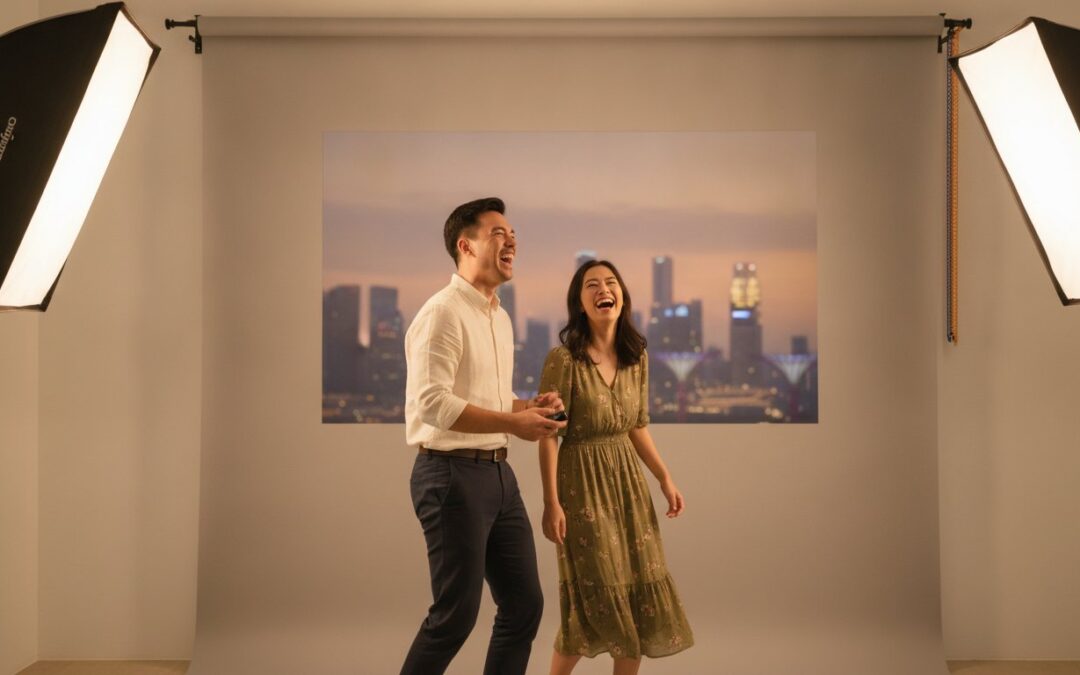
What if the most stunning photo in your gallery was the one where you weren’t actually “ready” for the shot? Most of us have experienced that familiar wave of anxiety the moment a camera lens focuses on us. You suddenly forget what to do with your hands, your smile feels forced, and the results look more like a stiff ID badge than a reflection of your personality. It’s completely natural to feel awkward in a traditional studio environment, especially when you’re trying to perform for a stranger.
Capturing genuine emotion shouldn’t feel like a chore. This article provides essential candid photography tips for self studio sessions to help you transition from staged poses to authentic, professional results. You’ll learn how to treat your session as a “game of intervals” by focusing on the movement and laughter that happens between the clicks. We will explore simple techniques to lower your guard, master natural movement, and use a private space to create keepsakes that feel truly like you.
Key Takeaways
- Discover how a private studio setting eliminates performance anxiety, allowing you to capture genuine expressions without the pressure of an audience.
- Learn to use music and interactive props as anchors for movement, ensuring your photos feel dynamic and alive rather than static.
- Apply practical candid photography tips for self studio sessions to shift your focus away from the lens and toward natural interactions.
- Master technical secrets for using the remote shutter, including timing delays that keep the equipment out of your finished portraits.
- Explore how the Basic Self-Photo Package provides a seamless, professional environment designed for creating high-quality personal keepsakes.
The Art of the Self-Studio Candid: Why Privacy Matters
A traditional portrait session often feels like a high-stakes performance. You walk into a room filled with bright lights and a professional photographer waiting for you to “be natural.” It’s a contradiction that leaves many people feeling stiff and awkward. A self-studio candid flips this dynamic entirely. These are authentic moments captured via a remote shutter without any external direction. You are both the director and the subject, which changes the energy of the room. This setup directly supports the 2026 authenticity movement, where “perfectly imperfect” shots with motion blur and unposed expressions are becoming the gold standard for social media and personal keepsakes; if you’re interested in how this philosophy translates to professional event coverage, you can learn more about Twig & Vine Photography and their unposed approach.
To understand the appeal, we should first look at the foundation of the style. What is candid photography? Essentially, it is the act of capturing a subject who is not posing for the camera. In a self-studio, you achieve this by removing the observer. When you hold the remote, you’re not just taking a picture; you’re documenting a moment that you own completely. These candid photography tips for self studio sessions will help you move away from the static, “staged” look that often plagues professional portraits.
The Psychology of Private Photography
Privacy is the primary catalyst for authenticity. When you remove the professional photographer from the room, the invisible pressure to perform vanishes. This absence of an audience allows you to drop your guard and experiment. Instead of a “directed” look where every limb is placed precisely by a stranger, you achieve a “discovered” look. This happens when you treat the studio as a personal creative playground. You might dance, sit on the floor, or share a private joke with a friend. Because nobody is watching, your emotional expression becomes genuine rather than manufactured. You’re free to be silly, serious, or vulnerable without judgment.
Using the Monitor as Your Creative Guide
While you are alone in the room, you aren’t flying blind. The live-view monitor acts as your mirror and your coach. It provides real-time feedback that helps you understand how your body language translates to the final frame. You can use this visual data to make quick, instinctive adjustments to your posture or facial expressions. It’s a powerful tool for building confidence as you see yourself looking great in real-time.
There is a subtle art to using the monitor without letting it dominate the shoot. A common mistake is “monitor-staring,” where your eyes are fixed on the screen instead of the lens during the actual capture. Use the monitor to check your frame or to ensure group spacing looks natural. Once you’re satisfied with the layout, return your focus to the lens or your companions. This ensures your candid photography tips for self studio result in photos that feel connected and alive rather than distracted.
Setting the Scene: Props and Preparation for Natural Shots
Preparation isn’t about rigid planning; it’s about setting the stage so that spontaneity can happen naturally. While the privacy of the room gives you the freedom to be yourself, the right environment provides the spark for movement. One of the best candid photography tips for self studio users is to choose props that require action. When your body is busy performing a task, your face naturally relaxes. This allows the camera to capture genuine expressions that a forced smile simply can’t replicate.
Professional photographers often use specific secrets to candid photography to capture unmediated moments. In a self-studio, you can replicate this by using themed attire to create a narrative. For example, opting for a Hanbok rental adds a layer of storytelling to your session. The flowing fabrics and traditional aesthetic encourage you to move, swirl, and interact with the garment. These motions create a series of dynamic, unposed shots that feel like a discovered moment rather than a planned portrait.
Interactive Props for Better Candids
Action-oriented props are far superior to static objects. Instead of just holding a flower, try using bubbles, confetti, or even a simple chair to change your levels. These items force you to interact with your surroundings rather than staring at the lens. If you’re visiting for graduation photography, don’t just stand with your scroll. Toss your cap in the air, adjust your gown, or laugh with your family. This “prop progression”—starting with simple items and moving to more active ones—keeps the energy high and prevents the session from feeling repetitive.
The Power of a Studio Playlist
Music acts as a rhythmic anchor for your session. It fills the silence and provides a steady beat to move to, which is vital for breaking through initial stiffness. Upbeat, high-tempo tracks are perfect for friends or families who want to capture high-energy laughter. Conversely, soft acoustic tracks work wonders for pre-wedding or maternity shoots where a gentler mood is required. Try the “silent dance” technique: move subtly to the beat between shots. This keeps your posture fluid and ensures you aren’t stuck in a single position for too long. If you’re ready to put these ideas into practice, you can reserve your private session today and start experimenting with your own creative rhythm.
Movement and Interaction: How to Look Unposed
The secret to a successful session lies in one simple rule: interaction over posing. When you stop treating the camera as an audience and start treating the room as a private conversation, the results change instantly. These candid photography tips for self studio sessions are designed to help you move past that initial “staged” feeling. By focusing on your partner, your children, or even a specific task, you allow the camera to capture your personality rather than just your likeness. This shift in focus is what separates a standard portrait from a truly authentic moment.
One effective way to break the ice is the “fake laugh” technique. It might feel ridiculous at first, but that’s exactly the point. The sheer absurdity of forcing a loud laugh in a quiet room almost always triggers a genuine, infectious smile within seconds. Use the “burst” method by clicking the remote rapidly during these transitions. This ensures you capture the micro-expressions that happen as you relax into a real moment of joy. It’s often these split-second frames between the “poses” that become your favorite photos.
Tips for Couples and Families
When you’re capturing family portraits, avoid the traditional “everyone look at the lens” approach. Instead, try the “whisper a secret” game. Have one family member whisper something silly or nonsensical into another’s ear. This naturally creates physical closeness and authentic reactions like leaning in or throwing a head back in laughter. Another great trick is walking in place or taking small steps toward the monitor. This creates a sense of dynamic progression and movement that makes the photo feel alive. These small interactions turn a standard shoot into a shared experience, which is always reflected in the final images.
Solo Candid Techniques
If you’re shooting alone, the “look away and snap” method is your best friend. It provides a pensive, editorial quality that looks like a high-end magazine spread. Try focusing on a small, repetitive action, like adjusting a sleeve, flipping your hair, or smoothing your garment. These mini-movements give your hands something to do and prevent the “stiff” look that comes from overthinking your posture. Don’t be afraid to vary your eye-line. Looking at the floor, up toward the ceiling, or off to the side creates a diverse gallery of shots. By moving through a sequence of small adjustments while clicking the remote, you’ll find those “in-between” frames feel the most natural.
Mastering the Remote: Technical Tricks for Seamless Candids
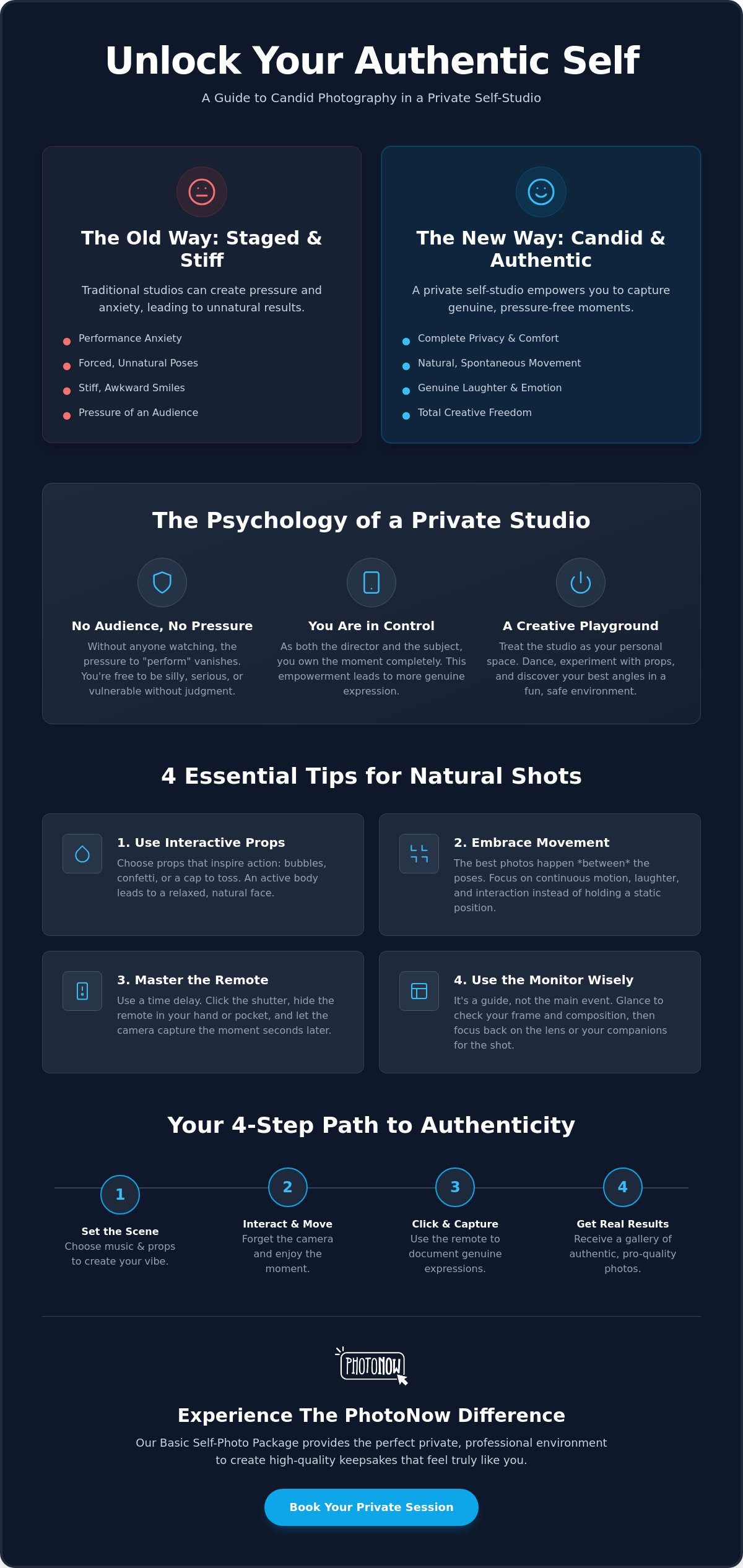
The remote shutter is your greatest ally, yet many worry it will clutter their final images. Learning to manage this small device is essential for mastering candid photography tips for self studio sessions. It allows you to trigger the camera at the exact moment a genuine laugh erupts, providing a level of control that traditional shoots lack. The key is understanding the rhythm of the hardware, specifically the slight timing delay between the press and the capture. This split second is your window to hide the device or adjust your pose for a seamless result.
While the goal is often to make the remote “invisible,” some modern aesthetics actually embrace its presence. In a “meta” or editorial style, showing the remote can tell a story about the creative process itself. This is particularly popular for social media content where transparency and “behind-the-scenes” vibes are highly valued. However, if your goal is a classic, unposed look, a few simple physical adjustments will keep the focus on you rather than the technology.
How to Hide the Remote Shutter
Hiding the remote is easier than you might think. You can tuck the device into the palm of your hand or hold it behind a partner’s back during a hug. A popular technique is the “click and drop” method. You trigger the shot and immediately drop your hand or tuck it out of sight before the shutter actually fires. If you’re shooting solo, try posing with your hands in your pockets or resting them behind your head. These positions naturally mask the remote while adding a relaxed, effortless vibe to your portraits. If you’re ready to test these technical tricks in a professional environment, book your Basic Self-Photo Package and start clicking.
Timing Your Shots for Peak Emotion
Timing is everything when you’re aiming for a “discovered” look. Most digital systems have a minor shutter lag, so you’ll want to anticipate the peak of an action. If you’re jumping or throwing confetti, click the button just before you reach the highest point. For groups, the “count to three” rule keeps everyone coordinated, but the best shots often happen on “four” when everyone relaxes. Don’t be afraid to take a high volume of photos. Capturing 50 frames to find those five perfect, unscripted moments is a standard part of the professional process. The more you click, the more likely you are to capture the micro-expressions that define a true candid.
The PhotoNow Experience: Your Private Space for Authenticity
PhotoNow provides the ideal canvas for implementing the candid photography tips for self studio sessions discussed throughout this guide. By combining a high-end studio environment with the intimacy of a private room, we remove the barriers that typically prevent people from feeling comfortable in front of a lens. Our goal is to act as your capable facilitator, providing the tools you need to document your most authentic moments without the typical stress of a traditional photoshoot. We provide the professional foundation, but you provide the soul of the image.
For those new to the concept, the Basic Self-Photo Package serves as the perfect entry point. It offers a straightforward, high-value experience that allows you to experiment with movement and the remote shutter at your own pace. Every session is equipped with professional-grade lighting and premium backdrops, ensuring that even your most spontaneous, unposed shots have a polished, cinematic quality. Whether you are planning a milestone celebration or sophisticated pre-wedding shoots, the environment is designed to elevate your personal narrative while maintaining a relaxed atmosphere.
Professional Quality, Private Setting
The core of our service is a “no-fuss” professional environment where the technical complexities are handled for you. We take care of the camera settings and lighting balance so you can dedicate your energy to the creative fun of the session. This reliability ensures consistent, high-standard results every time you click the remote. Located conveniently on Orchard Road, our studio offers a seamless escape for a quick yet high-impact photography session. It is an organized, efficient space where your peace of mind is prioritized, allowing your personality to shine through in every frame without the distraction of technical self-importance.
Ready to Capture Your Best Self?
Choosing a self-studio is the most effective way to secure authentic portraits that reflect who you truly are. By following these candid photography tips for self studio use, you can move past the stiffness of “staged” photos and embrace the beautiful imperfections that make a moment special. A mid-action laugh, a pensive glance away from the lens, or a shared secret with a loved one often results in a more meaningful keepsake than any directed pose. We invite you to step into our private space and discover how effortless professional photography can be. Book your private self-photo session at PhotoNow today and start creating your own “perfectly imperfect” gallery.
Step Into the Spotlight on Your Own Terms
Capturing genuine emotion is a skill that flourishes when you have the right environment and the right tools. By prioritizing privacy and movement, you’ve learned how to transform a standard photoshoot into a creative playground. These candid photography tips for self studio sessions emphasize that the most memorable moments often happen in the quiet spaces between the poses. Whether you’re using interactive props to spark a laugh or mastering the subtle timing of the remote shutter, you’re now equipped to document your true self with professional confidence.
Our private studio setting is designed for your ultimate comfort, removing the pressure of an audience so you can focus on being yourself. We provide professional-grade lighting and high-end equipment to ensure every shot meets the highest standards. You’ll enjoy the convenience of receiving instant digital copies and physical prints to preserve your favorite memories immediately. When you’re ready to create a gallery that feels as authentic as you are, we’re here to help. Book your Basic Self-Photo Package at PhotoNow today and experience the joy of the unposed. Your most beautiful portraits are just a click away.
Frequently Asked Questions
How do I avoid looking stiff in a self-studio?
The most effective way to avoid stiffness is to prioritize continuous movement throughout your session. Instead of holding a single pose, try “micro-actions” like adjusting your hair, smoothing your clothes, or shifting your weight from side to side. These small, repetitive motions keep your posture fluid and prevent the “frozen” look that often happens when you’re overthinking the shot. It’s helpful to remember that you’re alone, so you have the freedom to move as much as you like.
Will the remote shutter be visible in my photos?
The remote shutter will only be visible if you choose to show it as part of a modern, “behind-the-scenes” aesthetic. If you prefer a completely unposed look, you can easily hide the device in your palm or tuck it behind your back. This is a fundamental part of applying candid photography tips for self studio sessions effectively. Many clients also use a “click and drop” technique, where they trigger the shot and quickly move their hand out of the frame.
What should I wear for a candid-style photoshoot?
Select outfits that encourage physical interaction and movement to get the best results. Flowing fabrics, layered textures, and structured jackets provide great visual interest when you’re moving or dancing. These garments give your hands something to interact with, such as swirling a skirt or adjusting a collar. You might also consider a Hanbok rental to add a traditional, narrative element to your session. Comfortable clothing always translates to more natural expressions on camera.
Can I bring my own props to a self-photo studio?
Bringing your own props is a fantastic way to personalize your session and create a unique narrative. Items like musical instruments, milestone graduation caps, or even small personal keepsakes can help trigger more natural reactions. These objects give you something to “do” rather than just something to hold, which is essential for capturing authentic moments. Personal props often act as a comfort anchor, making it easier for you to relax and be yourself.
How many photos can I take during a standard session?
There is no limit to the number of photos you can capture during your booked time slot. You are encouraged to click the remote as often as you like to ensure you catch the perfect moment. This freedom allows you to use the “burst” method, where you take rapid shots during a movement or a laugh. The more frames you capture, the more likely you are to find those “perfectly imperfect” shots that feel truly authentic.
Is a self-studio session suitable for large groups or families?
Self-studios are exceptionally well-suited for families and large groups because the private environment removes performance anxiety. Without a photographer directing the group, family members can interact, joke, and play naturally. This results in group portraits that reflect genuine dynamics and shared joy rather than a line of forced smiles. The studio space is designed to accommodate various group sizes comfortably, ensuring everyone has room to move and interact for the camera.
Do I need any photography experience to use a self-studio?
You don’t need any technical photography knowledge to achieve professional results in a self-studio. The studio is pre-set with high-quality lighting and optimized camera settings, so your only job is to focus on the fun. A live-view monitor provides immediate feedback, allowing you to see exactly how your shots look in real-time. This user-friendly setup ensures that anyone can walk in and leave with a gallery of professional-grade images without any prior training.
What is the best way to time a candid shot with a remote?
Effective timing requires you to trigger the shutter just before a moment reaches its peak. Most digital systems have a very slight shutter lag, so clicking the remote a fraction of a second early ensures you capture the height of a laugh or the peak of a movement. Learning to account for this minor delay is one of the most useful candid photography tips for self studio enthusiasts. Practice a few test shots at the start of your session to find the perfect rhythm.
Recent Comments