
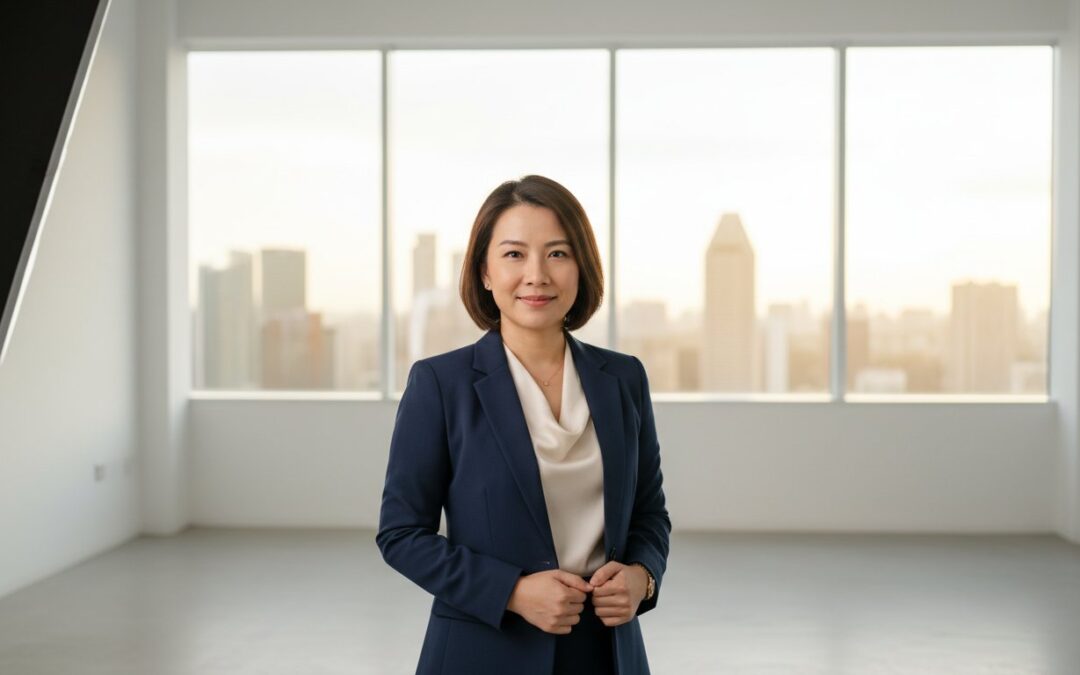
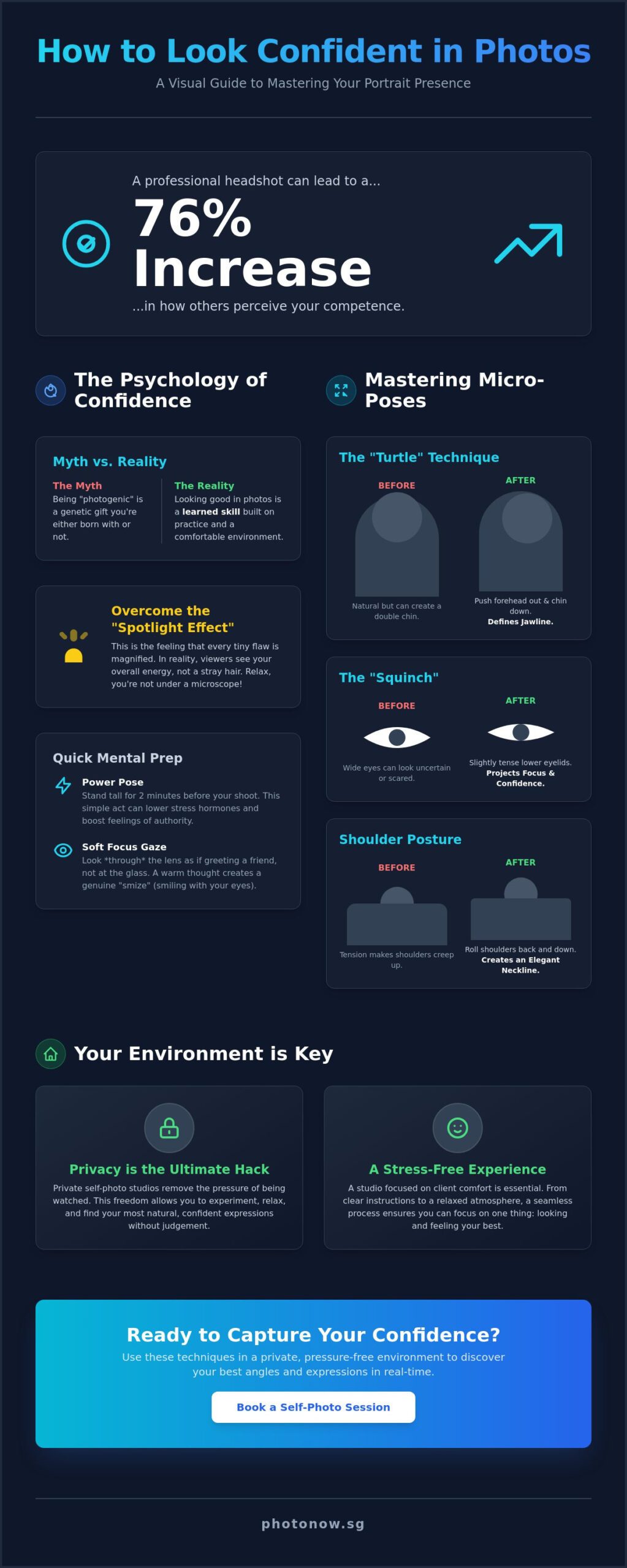
Did you know that a professional headshot can lead to a 76% increase in how others perceive your competence? It’s a staggering figure that proves mastering how to look confident in photos is more than just a vanity project; it’s a vital tool for your career and personal brand. Most people feel a wave of anxiety the moment a lens points their way, often feeling “stiff” or worrying about a smile that feels forced. You might even worry about being judged by the photographer, which is understandable when roughly 85% of the population experiences self-esteem challenges at some point.
We believe that confidence in front of the lens isn’t a personality trait, but rather the result of a supportive environment and mastered micro-adjustments. This guide will provide the professional techniques and psychological shifts you need to transform from camera-shy to camera-ready. We’ll walk you through reliable poses and strategies to reduce camera anxiety, ensuring your next corporate headshot or family portrait is a photo you’re truly proud to share. From understanding your best angles to finding comfort in the studio, you’re about to take full control of your portrait presence.
Key Takeaways
- Overcome the “Spotlight Effect” by recognizing that being photogenic is a learned skill rather than an innate talent.
- Master professional micro-adjustments like the “squinch” and “turtle” techniques to discover how to look confident in photos with instant jawline definition.
- Learn why private self-photo experiences eliminate the pressure of an observer; this allows you to experiment freely and find your most natural expressions.
- Identify the subtle shifts in posture and eye contact that differentiate a welcoming family portrait from an authoritative corporate headshot.
- Discover how selecting a studio environment focused on client comfort ensures a seamless transition from initial preparation to the final result.
The Psychology of Photogenic Confidence
Many people believe that being photogenic is a genetic lottery. It isn’t. This quality is actually a combination of environmental comfort and intentional mental preparation. Confidence starts in the mind. When you understand that the camera is merely a tool for documentation rather than a judge of character, your physical presence begins to soften. You aren’t “stiff” by nature; you’re simply responding to a perceived threat.
When you step in front of a lens, you likely experience the “Spotlight Effect.” This psychological bias makes you feel like every tiny flaw is being magnified under a microscope for the world to see. In reality, viewers see the whole image and the energy you project, not the single stray hair you’re worried about. Learning how to look confident in photos requires you to dismantle this bias and realize that being “camera-shy” is a myth. It’s a skill you can learn through repetition and the right setting.
Mental preparation involves setting a clear goal for the emotion you want to project. Are you preparing for a Corporate Headshot Package or a relaxed Family Portrait Package? Your objective dictates your energy. Before your session begins, try “power posing” in private for two minutes. Standing tall with your hands on your hips can lower cortisol levels and boost your sense of authority. Understanding the power of body language allows you to manipulate your own physiology to feel calmer before the first shutter click.
Overcoming the Fear of Being Watched
Ask yourself if your anxiety stems from the camera itself or the person standing behind it. For many, social judgment is the real hurdle. If you’re in a busy area, focus on a specific point just behind the camera to “ignore the world” around you. Take three deep, diaphragmatic breaths before the shoot starts. This simple act relaxes the tension in your jaw and shoulders. It prevents that forced, unnatural look that ruins many portraits. Breathe out slowly. You’ll feel the difference immediately.
Visualising Your Best Self
Spend time with a mirror to identify your preferred side and natural resting face. Most people have one eye that is slightly more open or a jawline that looks sharper from a specific angle. Find your side. When you’re ready to shoot, use the “Soft Focus” technique. Instead of staring intensely at the glass, look through the lens as if you’re greeting an old friend. Your mental state directly correlates to your eye expression; a warm, genuine thought creates a “smize” that no amount of forced smiling can replicate. A confident gaze is always rooted in a relaxed mind.
Mastering Micro-Poses for Instant Authority
Confidence is often a game of millimeters. Once you’ve settled the mental chatter discussed in the previous section, your physical alignment becomes the priority. Professional portraits rely on subtle movements that create depth and definition where the camera might otherwise flatten your features. By mastering a few specific micro-poses, you can control the narrative of your image and project a sense of quiet competence.
The “turtle” technique is a favorite among professional photographers for creating a defined profile. By subtly pushing your forehead toward the camera and tilting your chin down, you elongate the neck and eliminate the appearance of a double chin. When combined with the “squinch,” which involves slightly tensing your lower eyelids, you project an image of focus and intensity rather than wide-eyed uncertainty. These micro-adjustments are the secret to how to look confident in photos without appearing like you’re trying too hard.
Your shoulders and hands also play a critical role in your overall presence. Tension often manifests in the upper body, causing shoulders to creep toward the ears. Consciously roll your shoulders back and drop them down to create a long, elegant neckline. For your hands, the goal is to avoid looking clutched or rigid. Give them a specific task; you might lightly place one hand in a pocket or hold a prop that aligns with your profession. Keeping your fingers relaxed and slightly curved ensures you look approachable and at ease. Practicing these techniques during a Basic Self-Photo Package session allows you to see the results in real-time and adjust your posture accordingly.
The Anatomy of a Confident Smile
A genuine Duchenne smile involves the muscles around your eyes, not just your mouth. A “social smile” often looks hollow because the eyes remain static. To enhance your look, try the “tongue trick” by pressing your tongue against the roof of your mouth. This action naturally lifts the chin and tightens the area under the jaw. Remember to time your smile; holding it for more than a few seconds causes facial muscles to shake and look strained. It’s better to reset and smile fresh for each shot.
Posture and Body Alignment
Weight distribution is key to an engaging portrait. Leaning slightly toward the lens makes you appear interested and active. Use the “45-degree rule” by angling your body away from the camera while turning your face back toward it. This creates a more three-dimensional, flattering silhouette. Ensure there is “negative space” between your arms and your torso. Pinning your arms to your sides can make you appear wider and more tense than you actually are. Small gaps create a more defined and confident shape.
Why Privacy is the Ultimate Confidence Hack
Traditionally, a portrait session involved a stranger standing behind a camera, directing your every move. This dynamic often creates a barrier of social anxiety that makes it difficult to relax. The recent shift toward private self-photo experiences has revolutionized the industry by putting the subject back in control. When you remove the observer, you eliminate the fear of being judged for your posture or expression. This newfound freedom allows for genuine experimentation, which is the ultimate hack for anyone learning how to look confident in photos.
By utilizing a handheld remote control, you dictate the rhythm of the session. There is no pressure to perform on someone else’s timeline. You can take a moment to reset your breath, check your hair, or practice the micro-poses we discussed in previous sections. This private setting is the ideal environment to implement the strategies found in the definitive guide to self-photo studios, ensuring your experience is both productive and enjoyable. You are the director and the star, which naturally lowers your guard.
Control Your Narrative with Self-Photography
One of the most significant psychological benefits of a self-photo studio is the ability to see your shots in real-time on a professional monitor. This immediate feedback loop is transformative. Instead of wondering if your smile looks forced, you can see it instantly and make corrections. This environment encourages the “freedom to fail.” You might take twenty “bad” shots to find the one perfect frame, but in a private room, those experimental clicks don’t feel like mistakes; they are simply steps toward a great result.
Creating a Stress-Free Environment
A private studio allows you to curate the atmosphere to suit your personality. You can play your preferred music to set the mood and focus on the task without distractions. This lack of external pressure makes it much easier to manage outfit changes or prop adjustments without feeling rushed. It’s also the most effective place to avoid common corporate headshot mistakes, such as stiff posture or an unconvincing gaze. By taking the time to review your progress as you go, you ensure the final result is a true reflection of your professional authority. You aren’t just taking a picture; you are mastering how to look confident in photos through a series of intentional, stress-free choices.
Contextual Confidence: Business vs. Personal Portraits
The way you project confidence changes depending on the specific purpose of your image. A LinkedIn profile requires a different energy than a graduation memento or a family heirloom. Context is everything. Understanding the nuance between “authority” and “approachability” is the final step in mastering how to look confident in photos. While the physical techniques remain consistent, the intent behind your gaze and posture must shift to match the professional or personal setting of the shoot.
In a professional setting, your goal is to build immediate trust and signal competence. Research indicates that LinkedIn profiles with professional photos receive 14 times more profile views, making your visual presence a critical career asset. To achieve an authoritative look, prioritize a direct gaze. Looking straight into the lens suggests transparency and leadership. Use a “V-shape” posture by pulling your shoulders back and keeping your chest open to project a strong, capable presence. Your smile should also match your industry; a subtle, closed-mouth smile often conveys a serious, focused demeanor, while a warmer smile is ideal for creative or service-oriented roles. Staying current with professional profile picture Singapore trends for 2026 ensures your image aligns with modern personal branding standards and stands out in a competitive digital landscape.
The Corporate Headshot Framework
A successful Corporate Headshot Package relies on a balance of power and warmth. To project leadership, lean slightly toward the camera to show engagement. This movement, combined with a direct gaze, creates a sense of professional intimacy and reliability. If you’re in a high-stakes industry, keep your expression controlled. For those in more collaborative fields, a wider smile can make you appear more accessible to potential partners and clients. The key is to look like the best, most composed version of your professional self.
Casual and Creative Sessions
Personal portraits benefit from a more fluid and relaxed approach. Instead of static poses, try movement-based techniques to look more natural. Walking toward the camera or turning your head to laugh creates a candid feel that traditional posing often lacks. If you feel your hands becoming stiff, use props to anchor them. Holding a graduation cap during a Graduation Photography Package session or interacting with a loved one in a family photo studio provides a natural task for your limbs. This shift in focus reduces anxiety and allows your genuine personality to shine through. Dressing for the occasion also helps; wearing a rented Hanbok or your graduation gown provides a psychological boost that makes it easier to inhabit the celebratory mood.
Ready to put these techniques into practice? Book a professional studio experience today to capture portraits that reflect your true confidence and style.
The Stress-Free Path to Your Best Portraits
Confidence in front of the lens is a journey that moves from mental preparation to physical execution. By now, you’ve learned that appearing photogenic is a skill you can master through intentional practice and psychological shifts. The environment you choose plays a massive role in this transformation. When you select a studio that prioritizes your comfort, you remove the friction that usually leads to “stiff” or awkward results. High-quality equipment and professional lighting setups do about 50% of the work for you, creating a polished foundation so you can focus entirely on your presence.
Before every shot, run through a quick mental checklist to ensure you’re projecting the right energy. This simple routine keeps your movements intentional and your mind focused on the outcome. Consistency is the secret to how to look confident in photos every single time the shutter clicks.
- Eyes: Are you looking through the lens with a “soft focus” rather than staring at it?
- Jaw: Is your tongue pressed to the roof of your mouth to create a sharp profile?
- Shoulders: Have you rolled them back and down to release tension?
- Breath: Did you take a deep breath to relax your facial muscles?
Putting Techniques into Practice
It’s helpful to plan a “test shoot” before any high-stakes event, such as a milestone graduation or a wedding. Using a lower-stakes session, like a Basic Self-Photo Package, allows you to review your photos objectively. You can see which angles work best and where you might still be holding tension. This iterative process is the most effective way to learn how to look confident in photos. For those planning a celebration, considering photobooth hire Ireland can provide a similarly relaxed environment for guests to practice their presence. A professional environment validates your progress; it provides the high-quality results that prove your new skills are working. Seeing a great photo of yourself is often the final piece of the puzzle that permanently boosts your camera-ready self-esteem.
The PhotoNow Experience
Our private studio at Orchard Road is designed specifically for those who value privacy and a stress-free experience. We’ve removed the observer entirely, replacing the traditional photographer with seamless self-trigger technology. This allows you to work at your own pace while benefiting from professional-grade lighting that flatters every subject. Whether you need a Corporate Headshot Package or a fun Graduation Photography Package, our space provides the tools you need to succeed. Book your private session today to practice your new confidence-boosting skills in a setting that respects your time and your peace of mind. Mastering your portrait presence has never been more attainable or efficient.
Step Into the Spotlight with Certainty
Transforming your visual presence is a journey that begins with a shift in mindset and concludes with intentional physical adjustments. We’ve explored how to dismantle the “camera-shy” myth and the specific micro-poses that create instant authority in any frame. Mastering how to look confident in photos is a skill that flourishes when you have the space to experiment without the pressure of an audience. By focusing on your breath, your alignment, and your intent, you ensure that every portrait reflects your true competence and personality.
Your path to a stress-free photoshoot is ready and waiting. Our private studio environment offers a zero-judgement zone equipped with professional-grade lighting and DSLR equipment to handle the technical details for you. With real-time monitor feedback, you can perfect your poses instantly and leave with results you are proud to share. Book your private self-photo session at PhotoNow and discover your most confident self. You have the tools and the knowledge; now it’s time to step in front of the lens with total peace of mind.
Frequently Asked Questions
How do I stop my smile from looking fake in photos?
Focus on your eyes and the timing of the expression to ensure a genuine look. A convincing smile, often called a Duchenne smile, involves the muscles around the eyes rather than just the mouth. Try thinking of a humorous memory right before the shutter clicks. Resetting your face between shots prevents muscle fatigue, which is often the primary cause of a forced or “shaking” expression.
What is the best angle for a double chin in photos?
Utilize the “turtle” technique by pushing your forehead slightly toward the camera and tilting your chin down. This movement elongates the neck and creates a sharper jawline by physically separating the chin from the neck area. It’s a reliable professional secret that works for every body type. Keeping the camera lens at eye level or slightly above also helps maintain a flattering and defined silhouette.
Should I look directly at the camera lens or slightly away?
Your choice depends entirely on the specific context and the message you want to send. A direct gaze into the lens projects authority and builds immediate trust, making it the standard for professional headshots. If you’re aiming for a candid or creative feel, looking slightly away can create a sense of mystery or thoughtfulness. Both approaches are effective as long as your gaze remains focused.
How can I make my eyes look more “alive” in portraits?
Use the “squinch” technique and engage your thoughts to add energy to your gaze. Slightly tensing your lower eyelids creates a look of focus, which prevents the “deer in headlights” appearance often caused by camera anxiety. Thinking about a specific goal or a warm greeting while looking through the lens ensures your eyes project life. This mental engagement is a key part of learning how to look confident in photos.
What should I do with my hands if I feel awkward?
Give your hands a specific task or anchor them to a prop to eliminate stiffness. You might lightly place one hand in a pocket, hold an accessory like a graduation cap, or rest your hands gently on your lap. Avoid clenching your fists; instead, keep your fingers relaxed and slightly curved. Providing your hands with a “job” reduces self-consciousness and helps you appear much more at ease.
Can I really learn to be photogenic if I have always hated photos?
Yes, being photogenic is a learned skill that improves with the right environment and consistent practice. Most people who dislike photos are simply reacting to the pressure of being observed by a stranger. By practicing in a private studio where you control the trigger, you can master how to look confident in photos at your own pace. This iterative process helps you identify your best angles and build genuine self-esteem.
How does lighting affect how confident I look?
High-quality lighting defines your features and eliminates shadows that can make you look tired or uncertain. Professional setups use soft, even light to smooth your skin and highlight your eyes, which naturally boosts your perceived authority. When you don’t have to worry about poor exposure, you can focus entirely on your poses. Good lighting does a significant amount of the heavy lifting in creating a polished result.
What is the most flattering posture for a seated portrait?
Sit at the very edge of the chair and lean slightly toward the camera to appear engaged. Keep your back straight but not rigid, and angle your body at 45 degrees to create a more three-dimensional shape. This posture prevents you from slouching or looking too flat against the background. Crossing your legs at the ankles or knees can also add a touch of professional elegance and comfort to the final shot.
Recent Comments